TEN THINGS MORE LIKELY THAN A SHARK ATTACK 2017
2015 is the 40th commemoration of Steven Spielberg's Institute Grant winning Jaws – a film that obviously changed the way that Americans, and the world, saw sharks. Endless masses characteristic their feelings of dread of sharks and swimming in the sea – to this now 40-year-old mechanical shark.
While shark fears are boundless, genuine shark assaults are extremely uncommon. In 2014, the Worldwide Shark Assault Document affirmed 52 unmerited shark assaults in the Unified States (counting Hawaii). Utilizing 320 million individuals as a gauge of the 2014 American populace (which is a think little of the quantity of individuals in the U.S. at a given time) and the essential presumption that everybody has an equivalent hazard, the normal American has 1.625 in a million possibility of being assaulted by a shark in a given year.
Here are ten things that have higher chances than a shark assault in the Unified States:
Being acknowledged at Harvard (6 in 100 candidates)
Getting into a standout amongst the most prestigious schools on the planet looks quite regular contrasted with a shark assault (shutterstock).
Getting into a standout amongst the most prestigious schools on the planet looks truly normal contrasted with a shark assault (shutterstock).
Being conceived with additional fingers or toes (Polydactyly; 1 in 500)
Additional digits are significantly more likely than shark nibble scars.
Additional digits are significantly more likely than shark nibble scars.
Getting a foul ball (1 in 680)
You have higher chances of getting a bit of that foul ball than a shark does of getting a bit of you.
You have higher chances of getting a bit of that foul ball than a shark does of getting a bit of you.
Living to 100 years of age (1.73 in 10,000)
There are a greater number of centenarians than shark assault casualties.
There are numerous a larger number of centenarians than shark assault casualties.
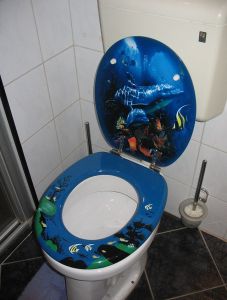
Being harmed by a can (96.4 in 100,000)
Think a shark is unnerving? What about this can?
Think a shark is unnerving? What about this can?
Making an opening in one on a standard 3 gap (1 in 12,500 beginner golfers)
An opening in one is more probable than a gap from a shark nibble.
An opening in one is more probable than a gap from a shark nibble.
Being hit by a comet or space rock (1 in 75,000)
Dangers from space are more basic than dangers from sharks (NASA).
Dangers from space are more normal than dangers from sharks (NASA).
Having conjoined twins (1 in 200,000 live births)
Twins are uncommon, conjoined twins are rarer, however shark assaults are even rarer.
Twins are uncommon, conjoined twins are rarer, however shark assaults are even rarer.
Getting struck by lightning in the U.S. (94 in a million)
Lightning may not ever strike twice, but rather it will probably strike than a shark.
The platitude may go "lightning doesn't strike twice," yet it will probably strike once than a shark.
Being managed an imperial flush in poker (1 in 649,740)
Indeed, even without a card shark, that tricky hand is still more plausible than a genuine shark.
Indeed, even without a card shark, that tricky hand is still more plausible than a genuine shark.
powerball (CNN)
In spite of the fact that shark assaults have low chances, they are still significantly higher than winning a Powerball big stake (CNN.com).
In any case, good luck playing the chances with that next lottery ticket. The odds of asserting a Powerball big stake are still even lower than getting assaulted by a shark — a thin 1 in 175 million.
For more shark relative hazard examinations, please visit:
2015 is the 40th anniversary of Steven Spielberg’s Academy Award-winning Jaws – a film that undeniably changed the way that Americans, and the world, viewed sharks. Countless masses attribute their fears of sharks and swimming in the ocean – to this now 40-year-old mechanical shark.
While shark phobias are widespread, actual shark attacks are very rare. In 2014, the International Shark Attack File confirmed 52 unprovoked shark attacks in the United States (including Hawaii). Using 320 million people as an estimate of the 2014 American population (which is an underestimate of the number of people in the U.S. at a given time) and the basic assumption that everyone has an equal risk, the average American has 1.625 in a million chance of being attacked by a shark in a given year.
Here are ten things that have higher odds than a shark attack in the United States:
-
Getting into one of the most prestigious schools in the world looks pretty common compared to a shark attack (shutterstock).
-
Extra digits are much more likely than shark bite scars.
-
You have higher odds of getting a piece of that foul ball than a shark does of getting a piece of you.
-
There are many more centenarians than shark attack victims.
-
Think a shark is scary? How about this toilet?
-
A hole in one is more likely than a hole from a shark bite.
-
Threats from space are more common than threats from sharks (NASA).
-
Twins are rare, conjoined twins are rarer, but shark attacks are even rarer.
-
The saying may go “lightning doesn’t strike twice,” but it is more likely to strike once than a shark.
-
Even without a card shark, that elusive hand is still more probable than a real shark.

Though shark attacks have low odds, they are still quite a bit higher than winning a Powerball jackpot (CNN.com).
Many TV shows and nature guides have been dedicated to educating the public on the most poisonous and venomous spiders, snakes and even frogs, but what about fish? Unlike spiders or snakes, we rarely hear about which fish are the most poisonous (or venomous). This week we are dedicating our blog post to these hazardous fish.
(Cooney)
First though let’s clarify some terminology. Poisonous and venomous are terms often used interchangeably but they have different meanings. A venomous animal has a means of injecting their toxin into another animal, whereas a poisonous animal can only deliver their toxin in a more passive manner (by being touched or eaten). A common example given to clarify this difference is that frogs are poisonous while snakes are venomous. It is also important to note that the affects from a venomous fish sting can often be relieved by immersing the wound in hot water (~105–115F) because these toxins are heat labile (meaning they can be destroyed or altered by heat).
1. Pufferfish (some species are also called toadfish) have been given the title ‘Most Poisonous Fish’ and have also been labeled the second most poisonous vertebrate in the world. The toxin responsible for ranking this fish so high in the “danger zone” is called tetrodotoxin. Tetrodotoxin is neurotoxic and inhibits neural transmission leading to weakness, paralysis, and even death at relatively low concentrations (~2mg). This toxin is found in the fish’s liver, ovaries, intestines and skin, leaving muscle tissue with relatively low and somewhat safe levels to eat. However, only highly trained and certified chefs are allowed to prepare this fish for consumption; a common practice in Japan where pufferfish are considered a delicacy.
Inflated Pufferfish (Source)
Pufferfish (Source)
2. Stonefish have usurped the title of ‘Most Venomous Fish’ in recent years. They often resemble encrusted stones (hence the name), blending into their natural environment with ease. They deliver their venom through a row of spines on their back that can be extended when threatened (or stepped on). Venom is involuntarily expelled when pressure is placed on the fish and the more pressure the more venom. They reside in the Indo-Pacific region and northern Australia. A sting from one of these fish can cause excruciating pain, rapid swelling, tissue death, muscle weakness, temporary paralysis, and in very rare cases death.
Stonefish (Source)
Stonefish (Source)
3. Lionfish were thought to be the most venomous fish until recent years when stonefish stole the title. These conspicuous fish have venomous dorsal, anal, and pelvic spines covered by a loose sheath that moves down and compresses venom glands when the spine punctures tissue. A sting from these fish can cause extreme pain, swelling, and in very severe cases, cardiovascular collapse. Most lionfish naturally reside in the Indo-Pacific but they have become an invasive species in recent years; most notably along the Atlantic coast of the United States where they are having a major impact on Atlantic coral-reef communities. Lionfish were likely introduced along the Atlantic coast through aquarium releases.
Lionfish (Source)
4. Stingrays are one of the most common groups of fish responsible for human envenomations; largely because many rays bury themselves on the seafloor where people unintentionally step on them. Stingray venom is generally cardiotoxic. The Bluespotted (native to the Indo-Pacific) and Southern (native to the southeastern US) stingrays are some of the most venomous of all stingrays. As a form of warning others, the Bluespotted stingray generally displays its bright blue colored spots as a warning to predators of its highly venomous sting.
Bluespotted stingray (Source)
5. Boxfish and trunkfish are closely related to pufferfish. While these fish are not nearly as poisonous as puffers, they do have an impressive way of defending themselves with poison. When threatened or stressed, they excrete a toxin from specialized skin cells into the water, poisoning marine life in their vicinity. The Hawaiian boxfish in particular excretes a toxin called ostracitoxin or pahutoxin that is known to breakdown or destroy red blood cells.
Boxfish (Source)
Some other venomous fish to check out are other scorpionfish (besides the stonefish and lionfish mentioned above), stargazers, which have two venomous spines in addition to organs near their eyes that cause electric shocks, and striped eel catfish.
Stargazer (Source)
If you know of any other venomous or poisonous fish not mentioned here or have experience with a species listed here please share your knowledge and experience below.
Be sure to like The Fisheries Blog on Facebook and follow us on Twitter (@FisheriesBlog).
References:
Auerbach PS. 2007. Marine envenomations. Adapted from the 5th edition of the textbook wilderness Medicine by Mosby-Elsevier.
Barss P. 1984. Wound necrosis caused by the venom of stingrays: pathological findings and surgical management. Med J Australia. 141: 854-855.
Boylan DB, Sch euer PJ. 1967. Pahutoxin: a fish poison. Science. 155:52-56.stingrays
Diaz JH. 2008. The evaluation, management, and prevention of stringray injuries in travelers.
Fenner PJ. 1998. Dangers in the Ocean: the traveler and marine envenomation. II. Marine Vertebrates. J Travel Med. 5:213-216.
Gwee MCE, Gopalakrishnakone P, Yuen R, Khoo HE, Low KSY. 1994. A review of stonefish venoms and toxins. Pharmacology and Therapeutics. 64:509-528.
Vetrano SJ, Lebowitz JB, Marcus S. 2002. Lionfish envenomation. The Journal of Emergency Medicine. 23:379-382.
But…best of luck playing the odds with that next lottery ticket. The chances of claiming a Powerball jackpot are still even lower than getting attacked by a shark — a slim 1 in 175 million.
For more shark relative risk comparisons, please visit:







EmoticonEmoticon